FEATURE: Top tips on becoming a successful session drummer

Luke Flowers offers some insights into honing your craft and the makings of a musician.
credit: brightersound.com

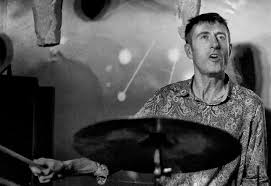
Feeling “revitalized” after two gigs in Tokyo with The Breath – and in the midst of an exciting tour with The Cinematic Orchestra – Luke Flowers sat down with me and discussed what makes a successful session drummer.

From an early age, Luke Flowers wanted to play music some sort of way but just “didn’t know how”. Then after an informal after-school lesson with a drummer he respected, Luke recalled how “I was hooked… drums are for me.”

I asked what the most important thing he did to get where he was today – Luke replied “a combination of really believing in yourself and just persevering”, going on to say how not believing in yourself fully means “you tend to not be as patient” and “end up maybe after a year or two thinking: ‘oh, maybe I’m not as good as I thought’”. Doubts, inevitably, will still creep in, but Luke argues there needs to be a spark, “something there that makes you carry on regardless”. Luke offers some insight into people he’s seen who perhaps don’t have that, commenting on how there’s a tendency to “not necessarily give up, but give up on their dreams”. Maintaining self-assurance is therefore instrumental in avoiding this situation.

Almost a pre-requisite for this line of work is enthusiasm, keeping engaged, and “just being into it”. When asked about touring, Luke commented on how it can be hard work, but one way he maintains a positive outlook is through “having that sense of adventure and being able to explore and experience new things”. Enthusiasm also paves the way for productivity. in his younger days more so than now, Luke would travel considerable distances to play any gig he could; it was all about “just learning and trying to soak it all up”.

One thing that separates Luke Flowers’ musical upbringing and the upcoming session players of today is technology. I asked him about the normalization of SPDs (electronic pads that are played alongside acoustic drums), and whether those who don’t embrace them become outdated. Luke offered that “the more things that you can do, the more enticing it is for people to book you”, so any technology you can incorporate into your playing is beneficial, however agreed it’s not mandatory for success in the industry.

Of course, the biggest technological change in recent years is the influence of social media – Luke adds “in some ways it’s easier, since you can promote yourself”, before highlighting that a challenge to overcome is how “there seems to be more competition”. Moreover, he notices how “people have less actual one on one contact” when promoting their musical ability online. This is something he can’t bear: “it’s one thing learning some fancy tricks and chops, but it’s another thing playing as a team”. Instead, enthusiasm and meeting people is “what it’s all about”.

It’s also important to stay loose stylistically. “The most important thing for me when I was starting off was playing as many styles, convincingly, as I could.” Luke admitted that wasn’t a business proposition, but simply out of love for music, however this lead him to meet musical people in several different circles:

“Keep your options open – try not to get too specialized too early – it’s good to keep a focus if you’ve got a band that you’re really into, but you can’t say ‘this is it’, otherwise you’re going to shut out so many other options.”
credit: ninjatune.net

Overall, while “true skill and passion for music should be the most important thing”, Luke realises that “you can’t be a dreamer – you’ve got to keep working”. This is tough, but crucial, advice for anyone wanting to break into the session drumming industry, or really any creative career path. Regarding plans for the near future, expect more gigs with The Breath & The Cinematic Orchestra – specifically two big upcoming shows in Los Angeles, as well as a few in Ireland. Moreover, The Cinematics recently released their first album in over 10 years – 2019’s “To Believe” – prompting a 2-week tour of Eastern Europe. Trust me, when it comes to the session drumming industry, Luke Flowers knows his stuff.
OPINION PIECE: Drill music’s unfair censorship – what genre’s next?

While understandable, the backlash surrounding this genre is short-sighted and could foreseeably do more harm than good.

credit: xxlmag.com

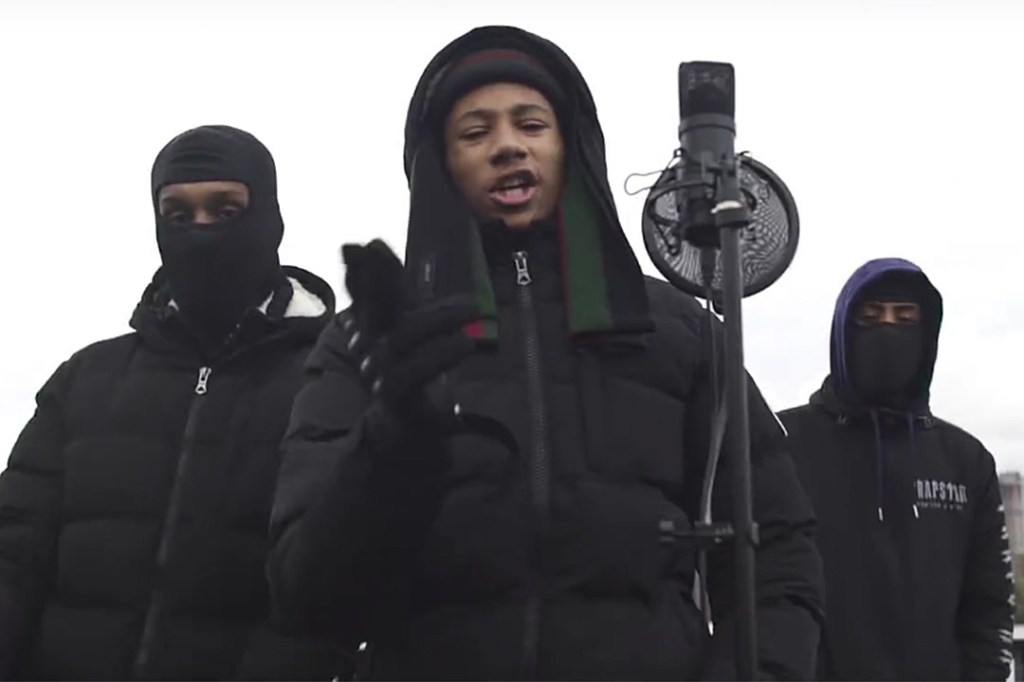
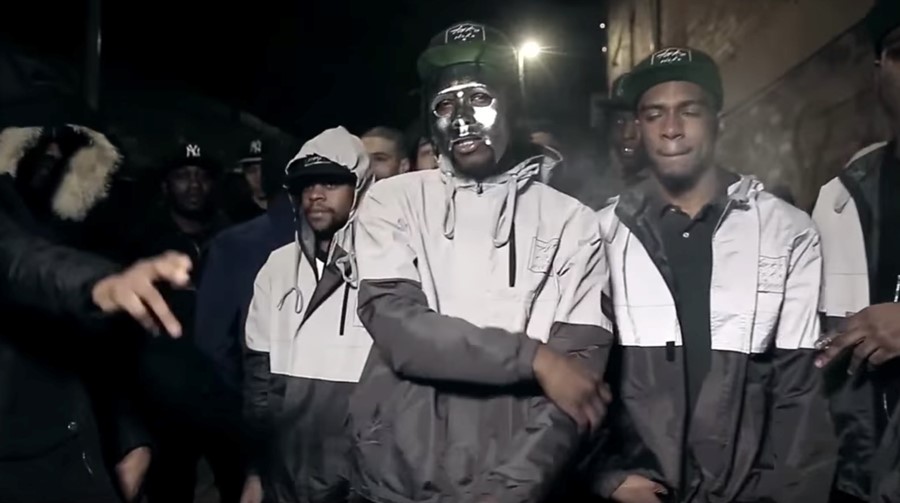
Statistics from the Met Police suggest “London’s murder rate has surged by 44 per cent in a year”, which The Sunday Times are quite casually putting down to a “new form of music”. Detective Superintendent Mike West would argue that “what looks like a music video can actually contain explicit language with gangs threatening each other.” Granted, authorities are often flummoxed by explicit material, but surely someone’s basement-raps-over-laptop beats aren’t the problem here?

To me, its unfounded to attack a genre as an entity. Regardless, police have asked YouTube to take down “between 50 and 60 videos” according to The Independent in an attempt to discourage their creators, whether criminal or not, from committing violent acts.

From a statistical point of view, the Sunday Times’ notion that “murders and stabbings plaguing London and other cities are directly linked to an ultra-violent new form of music sweeping Britain” makes sense. After all, it’s easy to blame the “new” when confronted with unsavoury statistics. However, I feel that they miss the point; it’s crime that drives the crime rate, not the music. Drill music is a mere reflection of what’s already going on, and by banning it you only serve to drive the problem underground. Drill DJ Bempah rightly adds that music “can glamorise [violent crime], but it can’t force you hand to commit those actions” in a discussion for The BBC which is telling.

It’s also interesting to consider other extreme-music subcultures that exist today, for example: black metal – a genre which thrives in the underground. For some background, the black metal acts Saor & Funereal Presence currently reside in the top 20 of Rate Your Music’s top albums of 2019 chart. The imagery and lyrics of this genre could arguably incite suicide in the same way that Drill music supposedly promotes murder, however you don’t see authorities banning these musicians from making black metal. I’d say it’s that inconsistency that makes the censorship of Drill music not sit right.

Paloma faith, in a discussion for The Guardian adds: “you can’t just think that if you take away the genre of music that it won’t happen in another manifestation”, which I find thought-provoking. It’s the notion of “another manifestation”, perhaps more destructive than constructive, that leads me to believe the censorship of Drill could cause more harm than good.

In short, Drill music should be treated with same respect other “extreme” styles of music (black metal, for example) do these days, and while it’s perhaps advisable to keep an eye on those making the more explicit songs, it’s be short-sighted (and even harmful) for police action to be taken on anyone and everyone, simply based on what genre of music they create.

NEWS PIECE: The recent controversy surrounding UK Drill

This “new form of music” divides opinions when crime rates are considered.

credit: dazeddigital.com

Drill music has seen a backlash in light of London’s increasing crime-rate. In 2018, The Independent quoted this statistic from The Metropolitan Police: “London’s murder rate has surged by 44 per cent in a year”. While some believe that the genre has no effect on these rates, others argue there is a correlation, therefore wishing to limit availability of this music.

According to a recent article from The Sunday Times, “murders and stabbings plaguing London and other cities are directly linked to an ultra-violent new form of music sweeping Britain”. The “new form of music” referred to here is drill, recognizable by its lyrical references to nihilism over homemade beats.

They also go on to describe the style as a “’demonic’ music linked to [the] rise in youth murders”, referencing one bereaved father who believed his son, 15-year old Jermaine Goupall “would still be here” without it. Concerned with quashing more murder-cases like Jermaine’s, “police fear a recent attack on one of Britain’s leading drill artists may have triggered reprisals that have fuelled north London’s knife crime epidemic”.

Detective Superintendent Mike West comments “what looks like a music video can actually contain explicit language with gangs threatening each other.” And in fact, the Metropolitan Police have asked YouTube to take down “between 50 and 60 videos, with more than 30 of the requests granted” according to an investigation made by The Independent.

Conversely, some have been quick to counter this argument. In response to a question on the BBC’s Today programme about a violent lyric referring to knife crime, drill DJ Bempah said: “If that’s what you see in your environment, as an artist, that’s what you portray in your lyrics.” He then added that the music: “can glamorise [violent crime], but it can’t force your hand to commit those actions.”

Moreover, while discussing the drill group 1011’s recent ban from making music without police permission, Paloma Faith comments that “you can’t just think that if you take away the genre of music that it won’t happen in another manifestation”. Here, we can see that not everyone’s on board with drill music being banned in light of these crime-rate statistics, continuing the topic’s divisive nature.

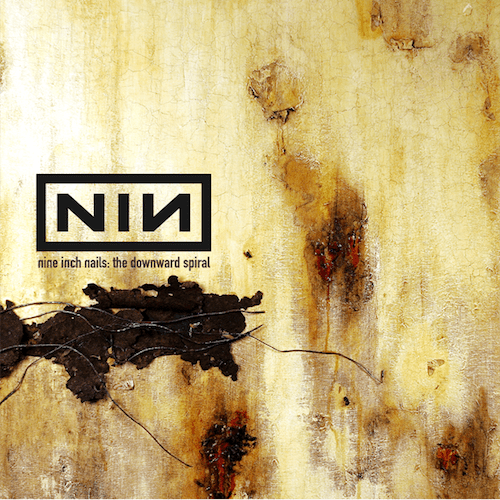
ALBUM REVIEW: Nothing can stop me now – 25 years of The Downward Spiral

Why Trent Reznor’s magnum opus is still as relevant and extreme as ever.

credit: alldayrecords.com

The album begins with a sample from George Lucas’ THX 1138, where a man is beaten by a prison guard. The hits get faster until they match the tempo of the first song, ‘Mr Self-Destruct’ – which arrives as a barrage of rhythmic noise. Kind of sets the scene better than a “1.2.3.4.” I’d say.

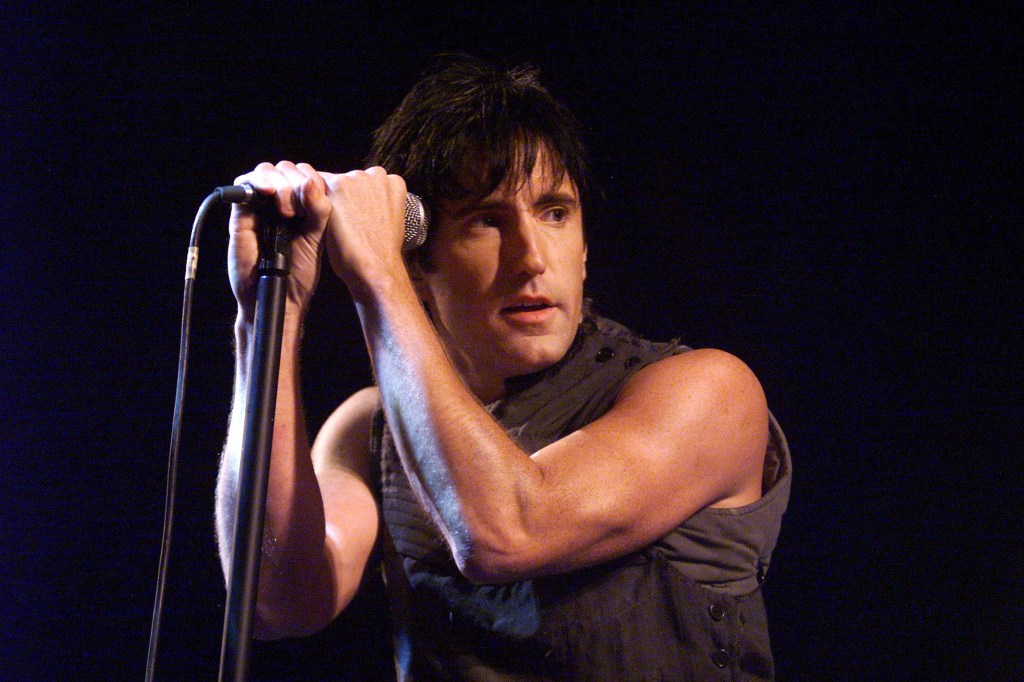
The tracks that follow all tie into a concept; they detail a man’s struggle with drug addiction as he traverses through themes of religion, sex and politics, eventually taking his own life in the penultimate song. The final track, ‘Hurt’, then plays like an end credit. While certainly not autobiographical, Trent Reznor reveals that the dissatisfactions with relationships, religion and government on the record were similar to those he had while recording it. In an interview with Rolling Stone, he commented: “[I] have nothing to preach to anyone about except: this is how I feel – if you can relate to that, great.”

The Downward Spiral generally operates on the same industrial rock sound that made Nine Inch Nails a household name in the early 90s. However, the amount of nuance to be uncovered within the instrumentation is staggering. Consider the step-up in complexity from 1989’s Pretty Hate Machine to the Broken EP (some parts where recorded the same year as Downward Spiral) – he basically develops this idea tenfold here, synthesising a dense, immersive and abrasive listen. As cathartic as the record is, though, there are moments of serene beauty (take the piano line near the end of ‘Piggy’, for example) that demonstrate Reznor’s mature approach to soundscapes.

credit: rollingstone.com

One musical device that sets The Downward Spiral apart from Nine Inch Nails’ previous work (and the genre in general) is the use of odd times, specifically 7/8. Its use is subtle, and may require hard listening to notice at first, but the skittering freak-out of ‘March of the Pigs’ & ‘The Becoming’s slow trudge are both made darker and more demonic by the inclusion of a 7/8-time signature.

Steve Huey wrote for Allmusic that track 5 – ‘Closer’ – “made [Reznor] a postmodern shaman for the ‘90s”, and from the first few moments it feels like the single – the one that mattered in 1994. When those steady drums (lifted from an equally sleazy Iggy Pop tune – a key influence, perhaps?) break the silence, you can’t help but experience the same kind of anticipation that 90s listeners surely felt. Despite the song being Nine Inch Nails at their catchiest, lines like “my whole existence is flawed” and the inclusion of abrasive drums near the end prevent it from sounding mainstream. In fact, I’d say that’s a major reason why The Downward Spiral aged so well: it struck a balance between pop commercialism and unfiltered artistry.

In short, the product of one man’s ideas comes to fruition in a scintillating and extreme display, that is conceptual as well as (dare I say it) totally fun to listen to. Released to instant success, The Downward Spiral has only seen more – for example, through its inclusion at #201 on Rolling Stone’s 2012 list of their 500 Greatest Albums of All Time. Moreover, the instrumentation which both accurately dates the album, yet also makes it sound quite unlike anything else, makes for a relevant – if not crucial – listen in 2019.